
It interacts with receptors on blood vessels supplying fat tissue, influencing fat storage and structural support systems.
Founders Launch Sale — 40% OFF
Limited to the first 100 customers
Pre-order today to secure launch pricing
All pre-orders will ship within 1 week once production and quality verification are complete
Founders Launch Sale — 40% OFF
Limited to the first 100 customers
Pre-order today to secure launch pricing
All pre-orders will ship within 1 week once production and quality verification are complete
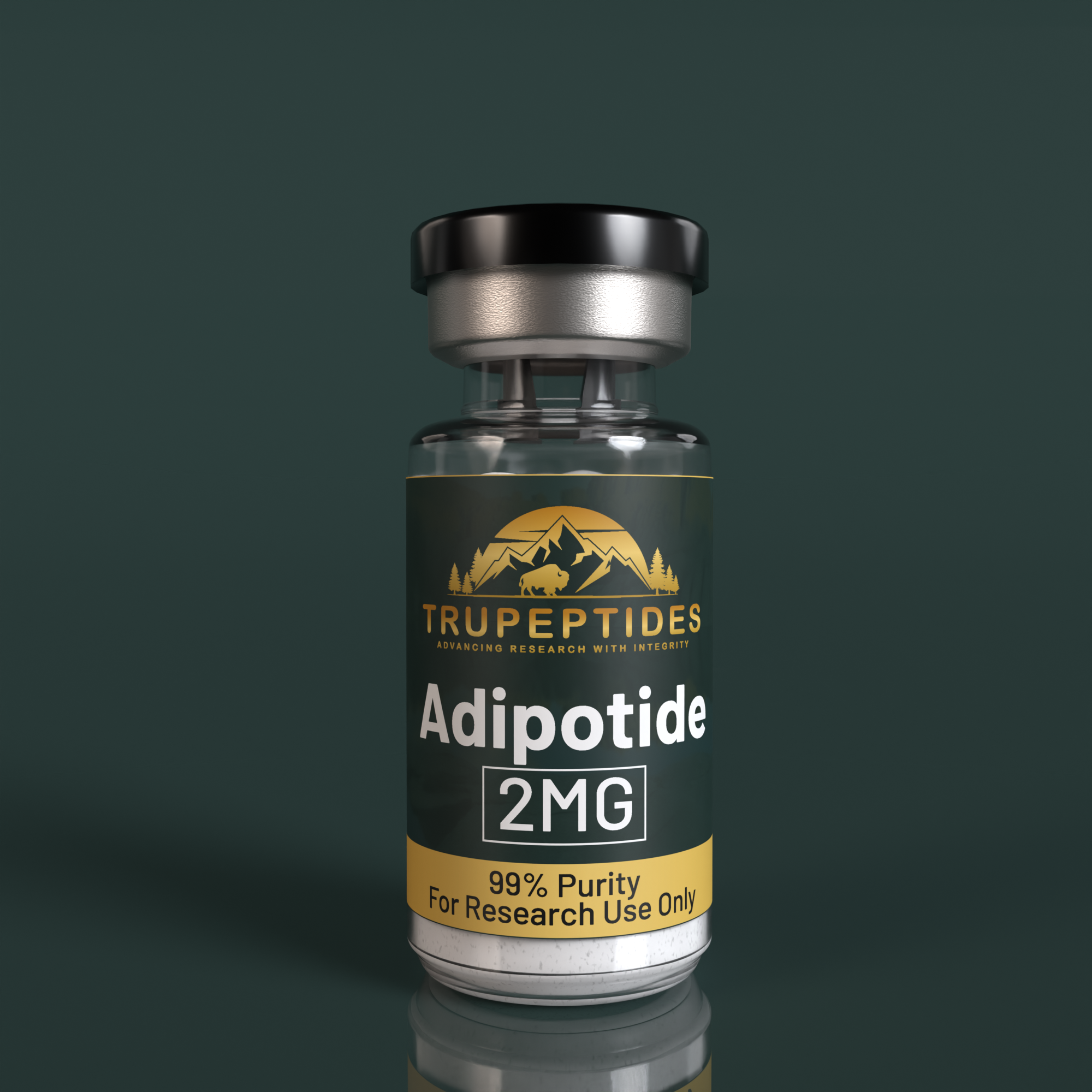
Adipotide
Categories: Peptides, Weight Loss & Metabolic Optimization
Adipotide is a research-use-only peptide designed for targeted cellular studies in laboratory contexts. This molecule is intended for academic and research applications only. For research use only.
$20.00 – $50.00Price range: $20.00 through $50.00
Satisfaction Guaranteed
Secure
Payment
Third-party
Tested
Research Use Disclaimer
Every serious peptide company prominently displays this. Example Research Use Only All products offered by TruPeptides are intended strictly for laboratory research purposes.
Research Use Disclaimer
Every serious peptide company prominently displays this. Example Research Use Only All products offered by TruPeptides are intended strictly for laboratory research purposes.
Adipotide
Adipotide is a research-use-only peptide based on a modified form of the adipocyte-targeting protein derived from the Bombyx mori silk gland protein. This peptide is being investigated in preclinical studies for its potential to selectively bind to adipose tissue, primarily targeting adipocytes (fat cells) through the fatty acid transport protein 2 (FATP2). Due to its highly specific cellular binding, adipotide holds promise for applications in basic biological research, including studies on metabolic processes, tissue engineering, and pharmaceutical drug delivery systems.
Research Context
Adipotide was initially developed for its potential to serve as a molecular probe for studying adipose tissue biology. In preclinical models, it has demonstrated selective accumulation in adipocytes while exhibiting minimal off-target effects in other cell types. This specificity makes it valuable for researchers studying adipocyte metabolism, obesity research, and the development of targeted therapeutic interventions. The peptide’s structure enables it to cross biological membranes and bind to fatty acid receptors, facilitating studies of lipid metabolism, inflammation, and energy homeostasis.
Research Overview
Preclinical investigations involving adipotide have primarily focused on its role as a tracer molecule for imaging studies and as a tool for modulating adipocyte function. Studies in rodents have shown that adipotide can be administered systemically and reliably localize to adipose depots, enabling researchers to visualize and analyze fat tissue distribution in vivo. Additionally, its potential applications in drug delivery systems, particularly for lipophilic compounds, remain under investigation. Research teams are exploring how adipotide could enhance the precision of targeted therapies in metabolic disorders, though further validation is required before translational applications can be pursued.
Key Research Focus Areas
- Adipocyte-specific labeling: Utilizing adipotide for high-contrast imaging of fat tissues in preclinical models to study metabolic dynamics.
- Basic molecular biology: Investigating the peptide’s interaction with FATP2 and other adipocyte-associated receptors to elucidate mechanisms of fat cell regulation.
- Drug delivery systems: Exploring the use of adipotide as a carrier for lipophilic pharmaceutical agents in targeted adipose tissue delivery.
- Obesity and metabolic research: Evaluating the peptide’s potential role in studies of obesity, insulin resistance, and adipose tissue remodeling.
- Tissue engineering: Investigating adipotide’s use in scaffold formulations for adipose tissue regeneration or reconstruction studies.
Safety and Compliance Note
Adipotide is provided for research purposes only and is not intended for human or animal consumption. Research institutions must adhere to all applicable regulatory guidelines, including proper handling protocols, disposal procedures, and institutional review board (IRB) or ethics committee approvals when conducting experiments involving this material. Users are responsible for ensuring compliance with local, national, and international laws governing the use of peptides in biological research. This product is not authorized for any therapeutic, diagnostic, or cosmetic applications.
For research use only. Not for human or animal consumption.
📚 Peer-Reviewed Study
Adipotide and Adipose Targeting: Effects on Fat Loss and Body Composition
▼
📚 Peer-Reviewed Study
Adipotide and Adipose Targeting: Effects on Fat Loss and Body Composition
Introduction to Adipotide
Adipotide is an experimental peptide designed to target the vasculature of white adipose tissue.
Research Objective
The objective of this study was to evaluate whether adipotide could selectively reduce fat mass by targeting adipose tissue vasculature.
Researchers also examined its impact on body weight, metabolic markers, and overall body composition.
Study Design and Methodology
Preclinical studies were conducted using controlled models receiving systemic administration of adipotide over a defined period.
Measurements included fat mass reduction, body weight changes, insulin levels, and metabolic indicators.
Key Findings — Targeted Fat Reduction
Adipotide demonstrated significant reductions in fat mass and overall body weight in preclinical models.
These effects were linked to targeted disruption of fat tissue support systems rather than generalized metabolic suppression.
Mechanisms of Action
Adipotide binds to specific receptors on adipose tissue vasculature, triggering localized cellular changes.
This leads to reduced blood supply to fat tissue, promoting breakdown and reduction of adipose mass.
Implications for Fat Loss Research
Adipotide introduces a unique approach to fat reduction by targeting structural support systems of fat tissue.
It is being explored in research focused on body composition, fat distribution, and metabolic efficiency.
Conclusion
Adipotide demonstrated the ability to reduce fat mass through targeted mechanisms in preclinical models.
These findings support further investigation into vascular-targeted strategies for fat loss research.
Frequently Asked Questions (FAQ)
What is adipotide?
Adipotide is a research peptide that targets blood vessels supplying fat tissue, influencing fat reduction processes.
How does it support fat loss research?
It targets adipose tissue directly by disrupting its vascular support, leading to reduction in fat mass.
What were the main findings?
Studies showed reductions in fat mass, body weight, and improvements in metabolic indicators in preclinical models.
Is this based on human studies?
Most findings are based on preclinical research and should be interpreted within a laboratory context.
What makes adipotide unique?
It targets fat tissue indirectly through its blood supply rather than altering appetite or general metabolism.
Why is this important?
It highlights a novel pathway for studying fat reduction and body composition optimization.
📚 Study Reference
View peer-reviewed research on adipotide and targeted fat reduction.

Related Peptides
Related products
-
Thymosin Alpha-1 10MG
$75.00 – $140.00Price range: $75.00 through $140.00This product has multiple variants. The options may be chosen on the product page -
AICAR 50MG
$65.00 -
KPV 10MG
$100.00 -
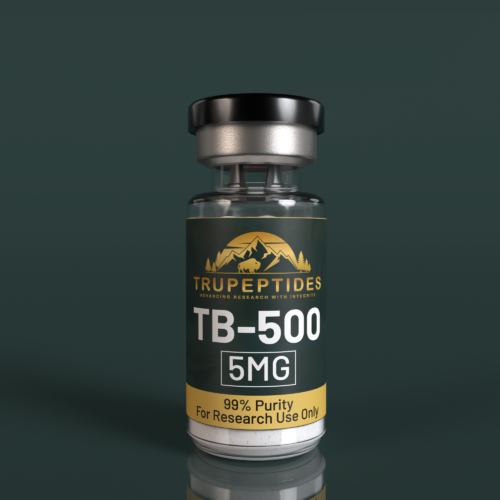
TB-500
$75.00 – $140.00Price range: $75.00 through $140.00This product has multiple variants. The options may be chosen on the product page