Unlike traditional growth factors, Tβ4 operates intracellularly and rapidly mobilizes during injury, supporting early-stage repair, inflammation control, and tissue regeneration.

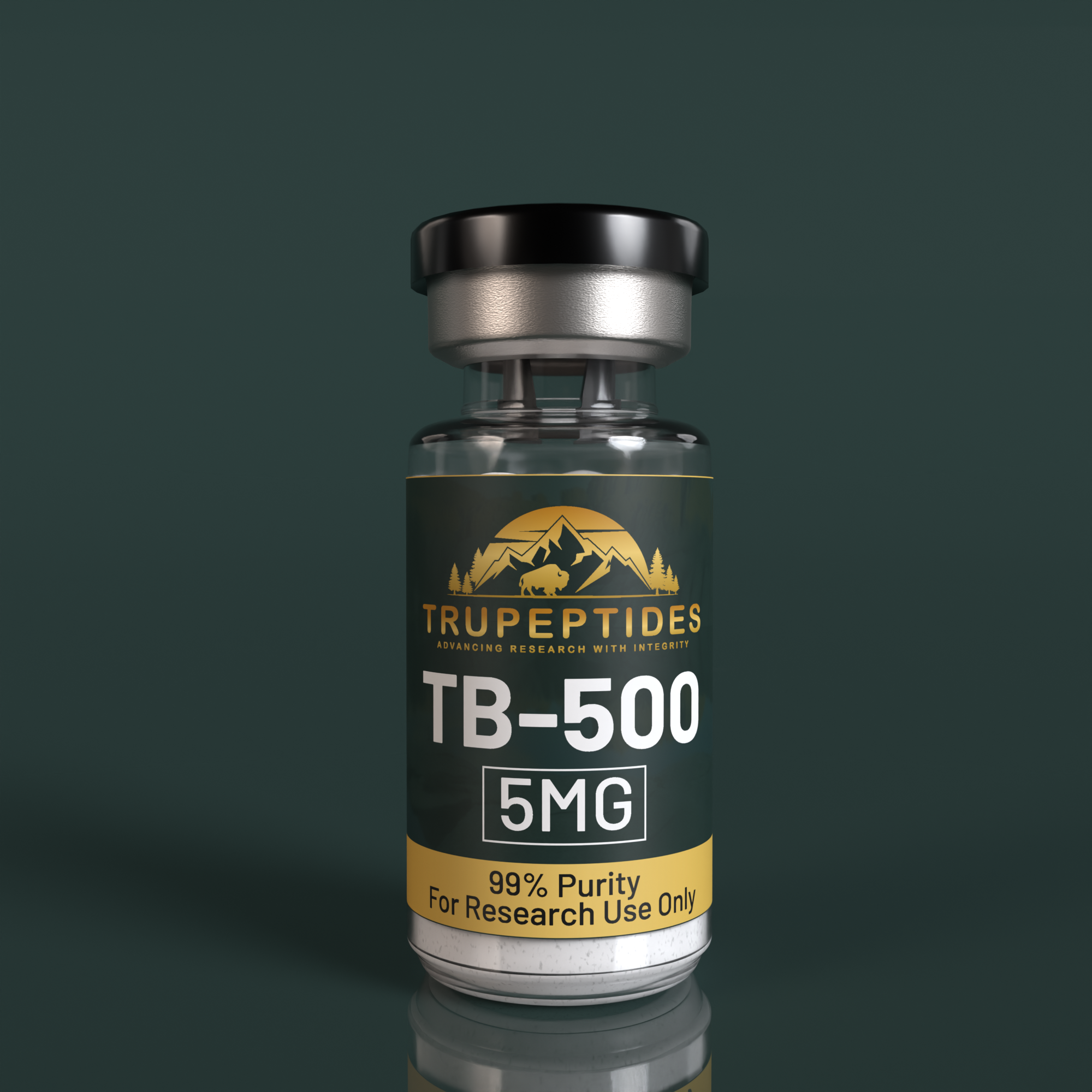
TB-500
TB-500 is a synthetic peptide derived from bovine tissue and has been investigated for its potential role in research settings involving tissue regeneration, wound healing, and cellular repair processes. This peptide has garnered attention within scientific and academic communities for its structural and functional similarities to native proteins involved in extracellular matrix formation.
Research Context
TB-500 has historically been explored in experimental animal models for its possible effects on tissue regeneration, particularly in scenarios where natural peptide signaling is either compromised or enhanced through synthetic intervention. Early studies indicated potential applications in models of muscle repair, skin regeneration, and even potential anti-aging effects under controlled research conditions.
Research Overview
The investigation of TB-500 primarily focuses on its ability to modulate cellular and extracellular matrix dynamics. It is structurally analogous to Thrombospondin-1, a protein known for its role in extracellular matrix organization and cell signaling. Research efforts have concentrated on its capacity to enhance tissue regeneration, improve wound healing responses, and potentially influence cellular proliferation and differentiation under in vitro and in vivo conditions.
Key Research Focus Areas
- Tissue Regeneration: Studies have explored TB-500’s potential in accelerating muscle, skin, and connective tissue repair in experimental animal models.
- Extracellular Matrix Interaction: Research examines TB-500’s role in modulating collagen and glycosaminoglycan synthesis, which are essential for structural tissue integrity.
- Cellular Signaling: Investigations into its effects on cell adhesion, migration, and survival pathways under various experimental conditions.
- Wound Healing Models: Analysis of its impact on inflammatory responses and granulation tissue formation in preclinical settings.
- Pharmacokinetics and Safety: Detailed studies assessing TB-500’s stability, absorption, and metabolic clearance within test subjects to ensure compliance with research standards.
It is important to note that TB-500 is not approved for therapeutic use in humans or animals and should only be utilized under the strict supervision of qualified researchers adhering to established scientific protocols.
Compliance Notice
For research use only. Not for human or animal consumption. This product is intended for academic or scientific investigation and should be handled with the appropriate safety precautions, including proper storage and disposal. Always consult with a qualified research specialist before conducting experiments involving TB-500.
🔬 Multi-Species Research
TB-500 (Thymosin Beta-4) in Animal Models: Tissue Repair and Regeneration
🔬 Multi-Species Research
TB-500 (Thymosin Beta-4) in Animal Models: Tissue Repair and Regeneration
Introduction to Thymosin Beta-4
Thymosin beta-4 (Tβ4), commonly known as TB-500, is a small actin-binding peptide present in nearly all mammalian cells.
Biological Properties in Tissue Repair
TB-500 exhibits multiple regenerative mechanisms including anti-inflammatory, antimicrobial, angiogenic, and anti-apoptotic effects.
It promotes cell migration, reduces tissue damage, supports vascular growth, and activates stem cells—creating a coordinated healing environment across tissues.
Mechanisms of TB-500 in Tissue Repair
Topical Applications in Animal Models
In corneal injury models, TB-500 accelerated epithelial healing, reduced inflammation, and preserved tissue clarity.
In dermal wounds, it enhanced wound closure, collagen formation, and angiogenesis—even in aged or diabetic models.
Additional observations included enhanced hair regrowth, indicating activation of follicular stem cells and regenerative pathways.
Systemic Applications Across Animal Models
TB-500 demonstrated cardioprotective effects by reducing infarct size and improving heart function.
In neurological models, it preserved neuron survival and improved recovery after injury.
In sepsis models, it reduced mortality by suppressing inflammatory cytokines, highlighting systemic anti-inflammatory benefits.
Mechanisms of Action
TB-500 activates pathways such as integrin-linked kinase (ILK) and Akt, promoting cell survival, migration, and angiogenesis.
It also modulates nitric oxide signaling, reduces inflammation, and stimulates stem cell activation—enabling multi-system regeneration.
Safety and Toxicology
Across multiple species including rats, dogs, and monkeys, TB-500 demonstrated excellent safety even at high doses.
No toxic effects were observed, supporting its strong tolerability profile in preclinical studies.
Conclusion
TB-500 exhibited broad regenerative capabilities across multiple tissues, including skin, heart, and nervous system.
Its ability to simultaneously modulate inflammation, angiogenesis, and cellular repair positions it as a next-generation regenerative peptide in research settings.
Frequently Asked Questions (FAQ)
What is TB-500?
TB-500 is a synthetic version of thymosin beta-4, an actin-binding peptide involved in cellular repair and regeneration.
How does TB-500 support tissue repair?
It promotes angiogenesis, reduces inflammation, prevents cell death, and activates stem cells to accelerate healing.
What makes TB-500 different from growth factors?
TB-500 is smaller, diffuses more easily, and affects multiple repair pathways rather than targeting a single receptor system.
Is TB-500 safe in animal studies?
Yes, high-dose studies across multiple species showed no observable toxicity.
Can these findings be applied to humans?
No, all findings are based on animal research and require further investigation.

Related products
-
Glutathione
Price range: $85.00 through $200.00This product has multiple variants. The options may be chosen on the product page -
MOTS-C
Price range: $110.00 through $360.00This product has multiple variants. The options may be chosen on the product page -
Snap-8 10MG
$15.00 -
Ipamorelin
Price range: $45.00 through $80.00This product has multiple variants. The options may be chosen on the product page