
These incretin hormones are naturally released in response to food intake and regulate glucose metabolism, insulin secretion, and appetite control. Tirzepatide combines both pathways into a single molecule, enhancing metabolic efficiency and signaling.
Founders Launch Sale — 40% OFF
Limited to the first 100 customers
Pre-order today to secure launch pricing
All pre-orders will ship within 1 week once production and quality verification are complete
Founders Launch Sale — 40% OFF
Limited to the first 100 customers
Pre-order today to secure launch pricing
All pre-orders will ship within 1 week once production and quality verification are complete
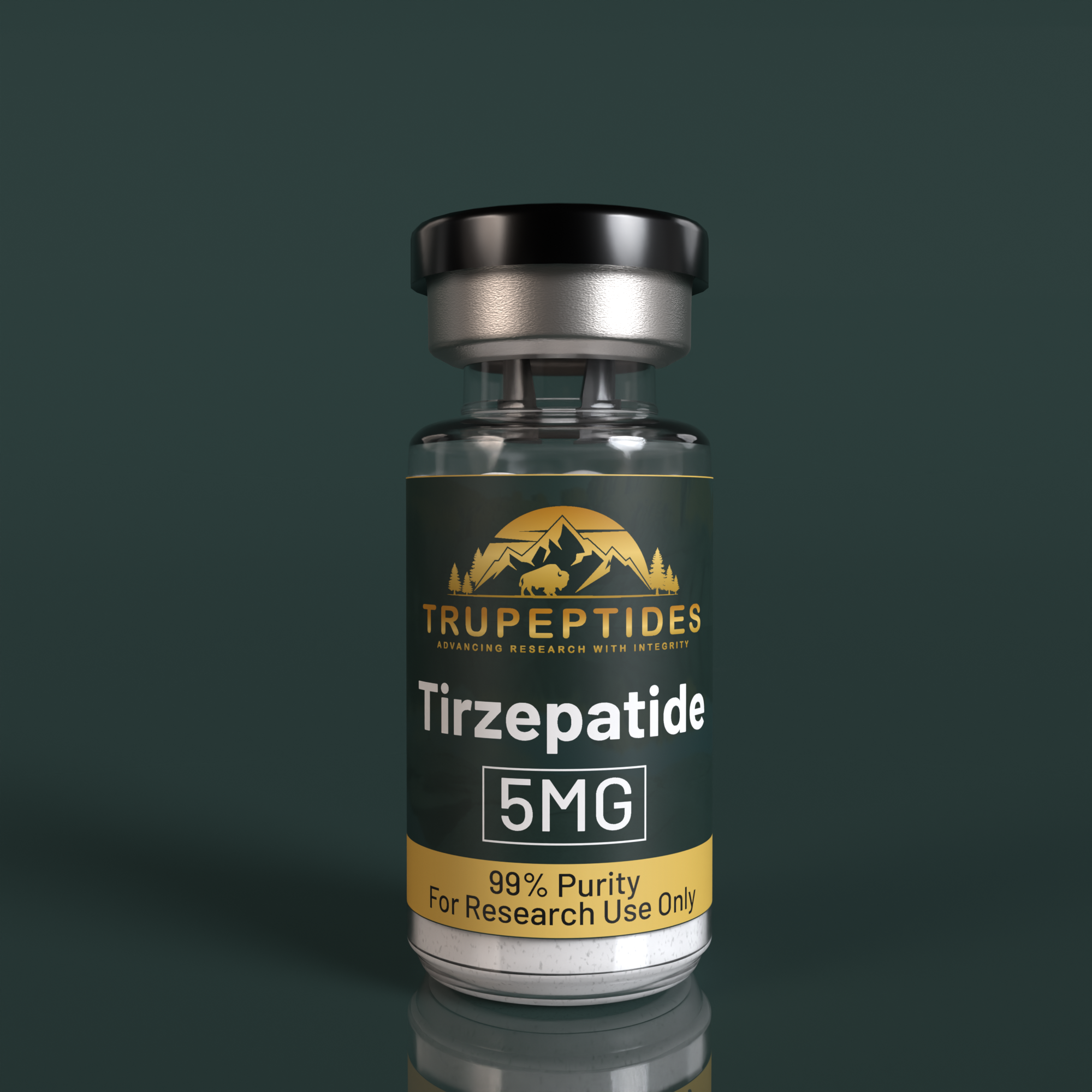
Tirzepatide
Categories: Peptides, Weight Loss & Metabolic Optimization
Tirzepatide is a research-use-only peptide under investigation for its potential pharmacological properties. This compound is classified for laboratory-use context and should not be used for human or animal therapeutic applications. For research use only.
$70.00 – $125.00Price range: $70.00 through $125.00
Satisfaction Guaranteed
Secure
Payment
Third-party
Tested
Research Use Disclaimer
Every serious peptide company prominently displays this. Example Research Use Only All products offered by TruPeptides are intended strictly for laboratory research purposes.
Research Use Disclaimer
Every serious peptide company prominently displays this. Example Research Use Only All products offered by TruPeptides are intended strictly for laboratory research purposes.
Tirzepatide
Tirzepatide is a synthetic peptide under investigation for potential applications in preclinical and early-stage research settings. As a dual-acting glucagon and glucagon-like peptide-1 (GLP-1) receptor agonist, tirzepatide demonstrates potential mechanisms of action relevant to metabolic and endocrine studies. This peptide is distinct from other GLP-1 receptor agonists, owing to its broader receptor engagement profile. The research community continues to explore its effects on glucose homeostasis, insulin secretion, and pancreatic beta-cell function within controlled experimental environments.
Research Context
Tirzepatide emerged from studies aiming to develop therapeutic agents targeting complex physiological pathways involved in diabetes and obesity management. Initial findings highlighted its ability to stimulate insulin secretion while suppressing glucagon release, suggesting potential efficacy in enhancing glycemic control. Preclinical investigations in animal models demonstrated improvements in insulin sensitivity and reduced hepatic glucose production, laying foundational data for further research. The peptide’s dual receptor activity has also sparked interest in its potential role in weight management studies, where traditional GLP-1 agonists demonstrated limited efficacy.
Research Overview
Tirzepatide’s research is conducted primarily in vitro and in vivo settings, including rodent and non-human primate models. Key studies have examined its metabolic effects, including:
- Enhanced glucose tolerance and reduced fasting hyperglycemia
- Promoted satiety through central and peripheral mechanisms
- Modulation of pancreatic endocrine function
Data generated from these investigations are critical for informing future pharmacological applications while adhering to rigorous research protocols. The peptide’s structure, pharmacokinetics, and safety profiles remain subjects of ongoing investigation within academic and pharmaceutical research communities.
Key Research Focus Areas
- Metabolic Pathway Analysis: Investigating tirzepatide’s effects on insulin signaling, lipogenesis, and energy homeostasis in experimental models. Studies often employ techniques such as real-time PCR, Western blotting, and metabolic flux analysis to assess downstream molecular changes.
- Endocrine Function: Evaluating tirzepatide’s impact on glucagon secretion, pancreatic beta-cell proliferation, and glucagon-like peptide-2 (GLP-2) activity. Research frequently utilizes isolated islets or cell lines to study hormone release dynamics.
- Behavioral and Physiological Responses: Assessing tirzepatide-induced changes in food intake, body weight, and energy expenditure. Behavioral studies often employ high-throughput phenotyping platforms to quantify consumption patterns and motor activity in rodent models.
- Pharmacokinetics and Toxicology: Characterizing the peptide’s absorption, distribution, metabolism, and excretion (ADME) profiles. Toxicology assessments include histopathological analysis, organ weight assessments, and behavioral toxicity evaluations in controlled dosing studies.
- Comparative Mechanism Studies: Contrasting tirzepatide’s effects with those of other GLP-1 receptor agonists, such as exenatide or liraglutide, to elucidate its unique receptor binding and functional selectivity.
Research involving tirzepatide is subject to ethical guidelines governing the use of animals and human-derived materials in scientific inquiry. All procedures must comply with regulatory standards for animal welfare and experimental design, as outlined by organizations such as the National Institutes of Health (NIH) and the European Convention for the Protection of Vertebrate Animals used for Experimental and Other Scientific Purposes.
Safety and Compliance Statement
The following disclaimers apply to this product:
- Tirzepatide is intended solely for research and development purposes within accredited academic or industrial research institutions.
- This peptide is not approved for use in human or veterinary medical applications.
- Users must adhere to all applicable regulatory guidelines for research material handling, including proper documentation, disposal, and containment protocols.
- Any deviations from approved research protocols may result in loss of product validity or legal consequences.
Research personnel must obtain necessary permits or approvals from their institution before utilizing this material.
For research use only. Not for human or animal consumption.
📚 Peer-Reviewed Study
Tirzepatide: Dual GIP and GLP-1 Receptor Agonism in Metabolic Regulation
▼
📚 Peer-Reviewed Study
Tirzepatide: Dual GIP and GLP-1 Receptor Agonism in Metabolic Regulation
Introduction to Tirzepatide
Tirzepatide is a synthetic peptide designed as a dual agonist of glucose-dependent insulinotropic polypeptide (GIP) and glucagon-like peptide-1 (GLP-1) receptors.
Research Objective
This body of research aimed to evaluate the efficacy and safety of tirzepatide in regulating blood glucose levels, reducing body weight, and improving metabolic markers.
Clinical trials also investigated its broader metabolic effects, including cardiovascular and lipid profile improvements.
Study Design and Methodology
Multiple randomized controlled trials (SURPASS and SURMOUNT programs) evaluated tirzepatide in patients with type 2 diabetes and obesity.
Participants received once-weekly subcutaneous doses (5 mg, 10 mg, or 15 mg), and outcomes were measured across glycemic control, body weight, lipid markers, and cardiovascular indicators over extended treatment periods.
Key Findings — Glycemic and Weight Reduction Effects
Tirzepatide demonstrated significant reductions in HbA1c, fasting glucose, and body weight across multiple studies.
Meta-analyses report substantial decreases in body mass index (BMI) and improved glycemic control compared to placebo and other GLP-1 receptor agonists. :contentReference[oaicite:0]{index=0}
Metabolic and Cardiovascular Effects
Beyond glucose regulation, tirzepatide has been shown to reduce LDL cholesterol, triglycerides, and blood pressure.
These findings suggest a broader role in metabolic health, potentially impacting cardiovascular risk factors through combined incretin signaling. :contentReference[oaicite:1]{index=1}
Mechanisms of Action
Tirzepatide activates both GIP and GLP-1 receptors, leading to enhanced insulin secretion, reduced glucagon levels, delayed gastric emptying, and decreased appetite.
This dual incretin mechanism amplifies metabolic signaling compared to single-pathway therapies, contributing to improved energy balance and nutrient utilization. :contentReference[oaicite:2]{index=2}
Implications for Metabolic Research
The dual-agonist approach of tirzepatide represents a novel direction in metabolic peptide research, combining multiple hormonal pathways into a single therapeutic mechanism.
Ongoing studies are exploring its role in obesity, cardiovascular health, and other metabolic disorders beyond glucose regulation.
Conclusion
Tirzepatide has demonstrated significant effects on glycemic control, weight reduction, and metabolic biomarkers in controlled clinical settings.
Its dual incretin receptor activity distinguishes it from traditional therapies, supporting continued research into its broader metabolic applications.
Frequently Asked Questions (FAQ)
What is tirzepatide?
Tirzepatide is a synthetic peptide that activates both GIP and GLP-1 receptors, involved in glucose and metabolic regulation.
How does tirzepatide work?
It enhances insulin secretion, reduces appetite, slows gastric emptying, and improves overall metabolic efficiency through dual incretin signaling.
What outcomes were observed in studies?
Studies reported reductions in blood glucose, body weight, BMI, and improvements in lipid and cardiovascular markers.
How is tirzepatide administered in studies?
It is typically administered as a once-weekly subcutaneous injection at varying dose levels.
Is tirzepatide research applicable to humans?
The findings are based on controlled clinical trials and should be interpreted within a research context.
📚 Study Reference
Forzano I. et al. Int J Mol Sci. 2022;23(23):14631.

Related Peptides
Related products
-

KPV 10MG
$100.00 -
BPC-157
$60.00 – $100.00Price range: $60.00 through $100.00This product has multiple variants. The options may be chosen on the product page -

Semax 10MG
$25.00 -
Kisspeptin-10
$65.00 – $120.00Price range: $65.00 through $120.00This product has multiple variants. The options may be chosen on the product page